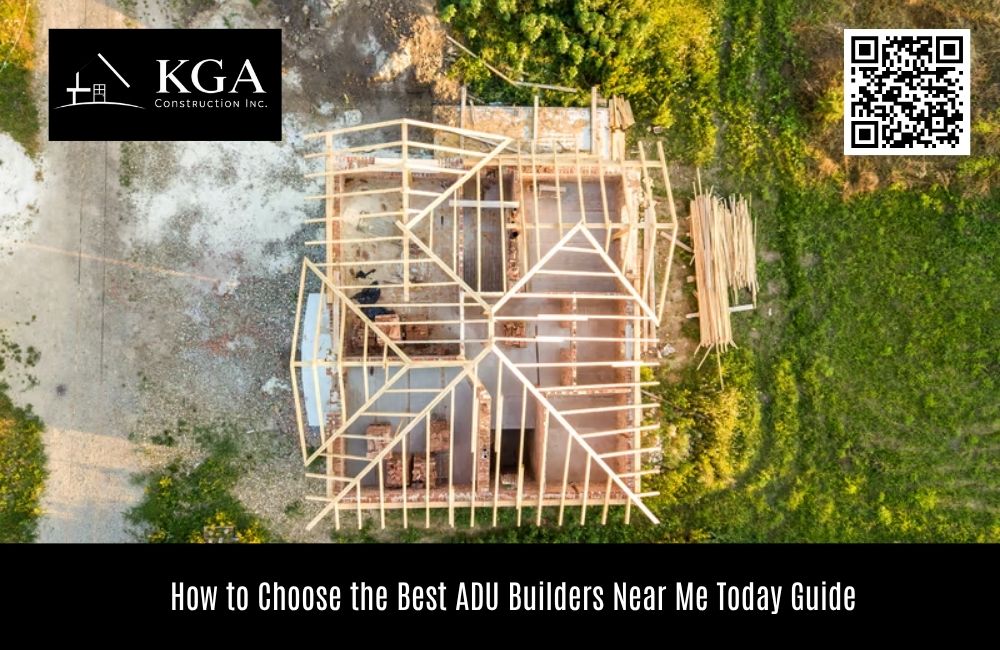
How to Choose the Best ADU Builders Near Me Today Guide
Searching for ADU builders near me can quickly produce dozens of options, but finding a contractor who is genuinely suited to your property takes more than comparing websites or choosing the lowest estimate. An accessory dwelling unit is a complete living space with structural, electrical, plumbing, mechanical, interior, and exterior components that all need to work together. For Sacramento homeowners, choosing the right builder means looking closely at relevant experience, project organization, communication, site conditions, and exactly what is included in the proposed work.
Start With Relevant ADU Experience
General construction experience is valuable, but homeowners should also look for experience that relates directly to the type of project they are planning.
ADUs combine many elements of residential construction within a relatively compact footprint. The builder may need to coordinate foundation work, framing, utilities, insulation, windows, roofing, kitchens, bathrooms, HVAC, electrical systems, and finishes.
Ask potential contractors about similar projects they have completed.
The goal is not simply to find someone who has worked on a house before. You want an ADU Contractor who understands how all the pieces of a secondary dwelling need to be coordinated from the beginning.
Look Beyond Photos of Finished Projects
Finished project photos can help homeowners understand a builder's style and workmanship, but photographs only reveal part of the story.
A beautiful kitchen does not show how effectively a contractor managed scheduling. An attractive exterior does not reveal whether the project scope was clearly communicated.
When reviewing previous work, pay attention to projects that resemble your goals.
If you are considering a detached backyard unit, examples of detached residential construction may be more relevant than photos of cosmetic interior remodels.
It is also reasonable to ask how the contractor handled challenging site conditions or construction changes on previous projects.
Make Sure the Builder Understands Your Property
Every Sacramento property presents a different construction environment.
Lot configuration, access, existing structures, utility locations, landscaping, driveways, fences, trees, and outdoor improvements can all affect how an ADU project is approached.
A contractor should want to understand the site rather than discussing the building as if it will be constructed on an empty lot.
This is particularly important in established neighborhoods where access to the backyard may be limited.
The proposed ADU needs to fit the property physically while maintaining practical circulation around the main house.
Pay Attention to the Questions the Contractor Asks
Homeowners naturally arrive with questions for a contractor, but the questions coming from the contractor can be equally revealing.
A thoughtful builder should want to understand why you are constructing the ADU, who may live there, what features matter most, and how you currently use the property.
Those conversations help determine whether the project is being approached as a generic structure or as a home designed around real needs.
A contractor who immediately discusses finishes without understanding the property or intended use may be moving too quickly past important planning decisions.
Compare Scope Before Comparing Price
Two estimates can show different totals while describing very different projects.
One proposal may include extensive site work, finishes, utility work, or cleanup that another leaves outside the price.
Comparing only the final numbers can therefore be misleading.
Homeowners should understand exactly what each proposal includes.
The clearer the scope, the easier it becomes to determine whether estimates are genuinely comparable.
If something important is missing, ask how it will be handled before making a decision.
A detailed conversation now can prevent disagreement later about who was responsible for a particular part of the work.
Be Careful With Vague Allowances
Some project details may not be finalized when the initial estimate is prepared.
In those situations, allowances may be used for certain materials or products.
The important question is whether the allowance reasonably reflects what the homeowner expects to select.
An unrealistically small allowance can make an initial proposal appear attractive while shifting costs into later decisions.
Homeowners should understand which selections remain open and how choosing products above or below an allowance affects the project price.
Transparency is more useful than an artificially low starting number.
Ask How Changes Are Handled
Even carefully planned construction projects can change.
A homeowner may request an upgrade, or work may reveal an existing condition that could not reasonably be seen beforehand.
The contractor should have a clear process for communicating those changes.
Homeowners should understand how revised work is documented, how pricing is presented, and whether approval is required before additional work proceeds.
A structured change process protects both parties because decisions do not depend entirely on verbal conversations remembered differently later.
Evaluate Communication Before You Sign
Communication problems often reveal themselves early.
Notice how clearly the contractor answers questions during the estimate and planning stages.
Do responses explain the issue or create more confusion? Are follow-up questions addressed? Does the contractor communicate what information is still needed?
You do not need constant updates about every small construction task, but you should understand how major decisions, schedule changes, and project questions will be communicated.
The person preparing the estimate may not always be the person managing daily construction, so ask who your primary contact will be after work begins.
Understand Who Will Actually Be on the Project
An ADU may involve multiple subcontractors and specialty trades.
Ask how the builder coordinates them and who supervises the project.
Homeowners do not necessarily need to manage each trade directly. In fact, one of the advantages of hiring a qualified general contractor is having a central point of responsibility for construction coordination.
What matters is understanding how the project is organized.
Clear responsibility can help prevent situations where homeowners are repeatedly asked to resolve scheduling or trade coordination problems themselves.
Discuss Utilities Early
Utilities can significantly influence an ADU project.
The new dwelling may require electrical, water, sewer, heating, cooling, and other building services.
Existing conditions and the proposed ADU location can affect how those systems are routed.
A builder should not treat utilities as an afterthought.
Homeowners should understand how these components fit into the broader project and whether additional professionals or evaluations may be needed.
Considering utility requirements early can also help determine whether the preferred building location makes practical sense.
Ask About Construction Access
The finished ADU may occupy only part of the backyard, but construction activity can affect a much larger portion of the property.
Materials need to reach the work area. Debris needs to leave. Equipment and workers need practical access.
Narrow side yards, gates, existing landscaping, fences, and outdoor structures may influence how this happens.
Ask potential builders how they expect to access the project area and which existing features could be affected.
This conversation can help homeowners prepare the property and understand what may need temporary protection, relocation, or removal.
Coordinate the ADU With Existing Outdoor Improvements
Many Sacramento homes already have patios, walkways, landscaping, or backyard gathering spaces.
An ADU should be planned around these features rather than considered separately.
If homeowners expect to work with patio builders as part of a larger backyard improvement, the ADU footprint should be established before finalizing the outdoor layout.
The relationship between the two spaces can affect privacy, circulation, views, and how much usable yard remains.
A coordinated plan usually produces a more intentional property than completing individual projects without considering what comes next.
Get the Construction Sequence Right
Project sequencing becomes particularly important when the backyard will receive several improvements.
Completing new patio construction before major excavation, utility work, or ADU material deliveries can expose fresh surfaces to unnecessary construction traffic.
In many cases, homeowners benefit from planning all major backyard improvements together even when they will not be completed at exactly the same time.
The contractor should understand which work needs to happen first and which finishes are better left until heavier construction is complete.
Good sequencing can reduce demolition, repairs, and duplicated labor.
Think About Patio Covers Before the ADU Is Finalized
A patio cover and an ADU can affect each other's design.
Homeowners planning to hire patio cover builders should consider where both structures will sit, how people will move between them, and whether one affects windows or views from the other.
A cover positioned without considering the future ADU may create awkward circulation or make part of the backyard feel crowded.
Likewise, an ADU positioned too close to an existing covered patio can reduce privacy or change how the outdoor space feels.
Looking at the entire yard together helps avoid these conflicts.
Consider How the Builder Approaches Small-Space Design
An ADU does not have much room for wasted square footage.
Ask how the builder approaches storage, circulation, mechanical equipment, door placement, and other details that affect usable space.
Small layout mistakes can have an outsized impact.
A poorly placed door can interfere with furniture. An oversized hallway can take space away from a bedroom. Insufficient storage can make an otherwise attractive unit difficult to live in.
A builder should understand that successful ADU construction is not simply about fitting all required rooms inside a small building.
Look for Long-Term Practicality
The ADU may serve several purposes during its lifetime.
A parent could live there initially, followed later by an adult child, guest, caregiver, or another occupant.
That makes flexibility valuable.
Ask whether the design can accommodate changing household needs without major alterations.
Comfortable room proportions, useful storage, practical entrances, durable materials, and sensible outdoor connections can make the dwelling useful to a wider range of occupants.
The best contractor is not simply building for move-in day. The project should continue working well years afterward.
Do Not Choose on Price Alone
Budget is important, but the lowest estimate is not automatically the best value.
A lower price may represent an efficient construction approach, but it can also reflect a narrower scope, different material assumptions, or missing work.
The same is true in reverse: a higher estimate is not automatically evidence of better quality.
Homeowners need enough detail to understand why the prices differ.
The strongest decision combines cost with relevant experience, scope clarity, communication, project organization, and confidence in how the contractor approaches the property.
Choose a Builder You Can Work With Through the Entire Project
An ADU project involves many decisions between the first conversation and the finished dwelling.
Homeowners should feel comfortable asking questions and discussing concerns throughout that process.
The contractor should be able to explain construction issues in understandable language without making every conversation unnecessarily complicated.
KGA Construction Inc. provides ADU construction, residential remodeling, additions, patios, and related construction services throughout Sacramento and surrounding communities. When comparing local patio cover builders, homeowners can make a stronger decision by looking beyond price and focusing on the builder's experience, communication, scope, coordination, and understanding of the property as a whole.
Contact KGA Construction Inc.
KGA Construction Inc.
Address: 400 L St, Rio Linda, CA 95673, United States
Phone: +1 (916) 320-6902
